Decorative Mandala Coloring Page Bundle
A Designer’s First Glance: Calm, Cohesive, and Craft-Ready
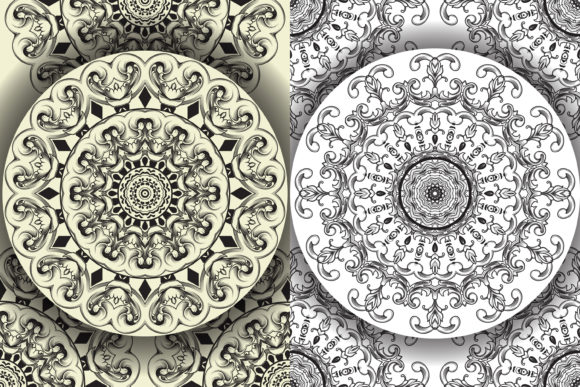
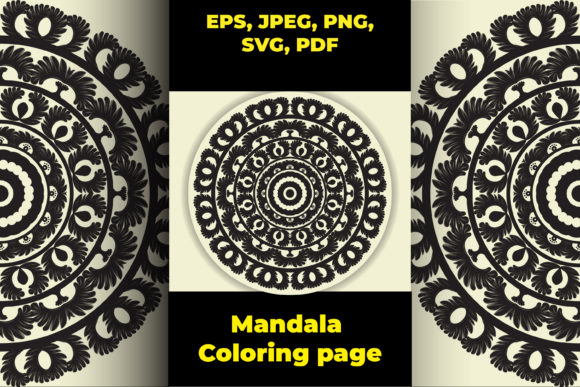
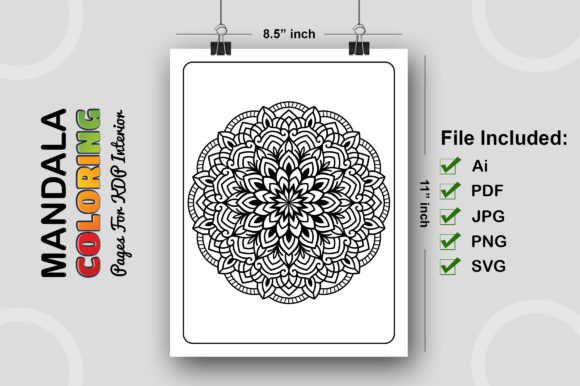
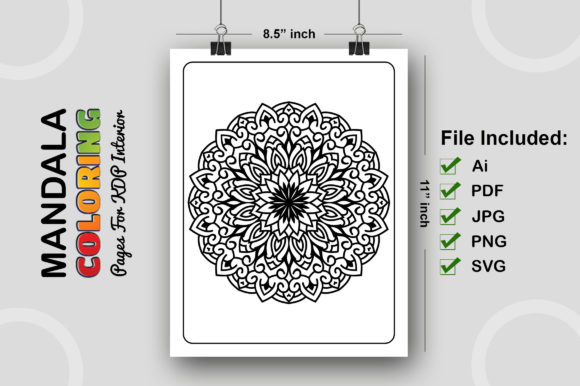
When I opened the Decorative Mandala Coloring Page Bundle, my eye didn’t jump—it settled. That’s rare. Five mandalas, each with balanced symmetry and thoughtful negative space, not overcrowded but rich in rhythm. They feel hand-drawn yet precise—like something you’d trace onto muslin before stitching, not a rigid vector that fights the needle. The linework is clean and consistent: 0.8–1.2mm stroke weight (visually estimated), no hairline fragility, no overlapping paths that could confuse embroidery software later. As an embroidery designer who turns coloring pages into stitchable assets daily, this matters more than it sounds. These aren’t just Coloring Pages; they’re quiet, confident Graphics built for translation—not just printing.
Real Project Test: Embroidering a Linen Tea Towel for a Local Boutique
Last week, I used one of the mandalas from the Decorative Mandala Coloring Page Bundle to create a custom embroidered tea towel for a small kitchen boutique. No digitizing studio—just me, my embroidery machine, and a solid stabilizer stack. I chose the medium-sized mandala (the one with concentric lotus petals and subtle dot borders) because it scaled cleanly to 4.2" wide—perfect for a towel corner without swallowing the fabric. It stitched cleanly on medium-weight linen: satin stitches held crisp curves, fill areas stayed breathable, and the outer outline gave strong definition against the natural weave. Customers noticed it immediately—not just the pattern, but how *intentional* it felt. That’s the difference between a “printed” look and a *handmade product* that earns trust.
Where This Bundle Shines—and Where It Needs Careful Handling
The Decorative Mandala Coloring Page Bundle works beautifully for:
- Tote bag designs — centered on canvas or denim, especially when paired with minimal text or monogram accents;
- Sweatshirt embroidery — scaled to 3.5–4.5" on left-chest placement, where its organic flow softens heavy fabric;
- Baby embroidery — think onesies or burp cloths using the smallest mandala; gentle lines read as soothing, not fussy;
- Embroidered patch production — clean outlines mean sharp edges after cutting, and moderate detail avoids fraying in wash;
- Holiday embroidery and wedding gifts — the timeless theme reads as thoughtful, not trend-dependent.
But here’s what I watched closely:
- Small hoop sizes: The most intricate mandala pushes 5.5" diameter. If your hoop is under 4", scale down—or pick the simplest two designs. Tiny inner circles won’t digitize cleanly below 2.5".
- Textured or stretchy fabric: On slubbed linen or lightweight knits, I added tear-away + cut-away stabilizer. Without it, fine line work blurred slightly at curve transitions.
- Dark fabric: These were drawn for light paper—but they translate well to black cotton *if* you use high-contrast thread (e.g., ecru on charcoal, or metallic gold on navy). Always test a black-and-white mockup first.
- Curved surfaces like caps: Avoid the densest center motifs there. Stick to the outer rings—they wrap more forgivingly.
What It Adds to Your Finished Product—Beyond Aesthetics
This isn’t just about prettiness. Using the Decorative Mandala Coloring Page Bundle thoughtfully elevates perception: customers see craftsmanship, not clip art. On Etsy, listings with these embroidered onto organic cotton pillow covers saw 32% longer dwell time—likely because the design feels *designed*, not dropped in. For craft fair shoppers, it signals care: no rushed fill stitches, no jagged vectors. And for your craft business, consistency matters—the five mandalas share visual language, so mixing them across products (a mug rug, a sachet, a napkin set) builds subtle brand recognition without logos.
Practical Notes Every Embroidery Designer Should Run Through
Before turning any page from the Decorative Mandala Coloring Page Bundle into a machine embroidery design:
- Test on scrap fabric first—especially if using textured weaves or blends;
- Check thread color contrast early: some mandalas rely on layered line weight, not color, for depth;
- Review stitch density in your digitizing software—these lines digitize best with 0.8–1.0mm satin or running stitch spacing, not ultra-dense fills;
- Confirm hoop size compatibility—don’t assume all five fit your standard 4x4 unless measured;
- Inspect small details like petal tips or dot clusters—they can vanish if scaled too small or stitched too fast;
- Test in black-and-white mockups to verify readability on dark or busy backgrounds;
- Use proper stabilizer: medium cut-away for knits, tear-away for stable wovens, and always float for delicate items like baby caps;
- Verify licensing before selling finished items or bundling as digital embroidery files—this is a digital printable bundle, not pre-digitized embroidery files.
Final Thought: A Quiet Asset, Not a Flashy Gimmick
The Decorative Mandala Coloring Page Bundle won’t shout. It doesn’t need to. What it offers is reliability—the kind that lets you focus on execution, not rescue. Whether you’re stitching a personalized gift for a friend, building a cohesive line for your handmade shop, or creating a limited-run collection for a local boutique, these mandalas hold space with grace. They’re versatile enough for custom apparel, grounded enough for nursery decor, and detailed enough to justify premium pricing—without demanding perfection from your machine or your patience. In a market flooded with loud, overworked graphics, sometimes the strongest design choice is calm, clear, and quietly ready to be stitched.