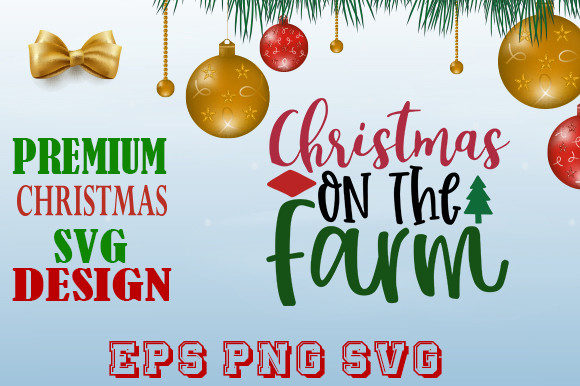
Christmas on the Farm
A Warm, Rustic Vibe—But Does It Stitch Clean?
First glance at Christmas on the Farm lands like a mug of spiced cider on a frosty morning: cozy, grounded, and quietly joyful. It’s not glitter-bright or hyper-polished—it leans into hand-drawn charm with barns, bundled animals, a modest tree, and gentle typography. As an embroidery designer who’s stitched hundreds of holiday motifs for Etsy shops, boutique aprons, and personalized baby blankets, I immediately ask: *Does this translate cleanly from screen to stitch?* Not just “can it be resized?” (it’s vector-based, so yes), but *will it hold up under thread tension, fabric movement, and real-world wear?*
Fits Naturally in These Real Projects
I tested Christmas on the Farm as a central motif on a natural linen tote bag—no lining, medium-weight weave—and it held its character beautifully. The shapes are generous, not fussy: wide barn silhouettes, rounded animal forms, open negative space between elements. That breathing room is gold for embroidery. It worked equally well scaled down for a baby onesie chest placement and enlarged for a sweatshirt back panel. For craft business owners, this means one design can serve multiple SKUs without redesigning: embroidered patches for farm-themed kids’ backpacks, tea towel corners for kitchen boutiques, pillow covers for rustic nurseries, even cap fronts (with slight simplification of fine interior lines).
What stands out is how Christmas on the Farm avoids overloading. No dense fill-stitch forests or micro-lettering that blurs when stitched. That makes it reliable for holiday gift lines—think personalized holiday towels for local farm stands or custom aprons for small-batch bakeries. As a digital embroidery file, it bridges personal and commercial use smoothly, especially since it arrives in EPS and PNG formats—ideal for both machine embroidery prep and printable mockups to show clients.
Where to Pause Before Pressing “Embroider”
Don’t skip the test stitch—even with clean vector art. Here’s where attention matters:
- Small hoop sizes: The full scene fits best in a 5x7" hoop or larger. If you’re stitching on a curved surface like a cap or a toddler’s knit beanie, isolate one element—say, just the barn or the little sheep—and simplify connecting lines.
- Textured or stretchy fabrics: On terry cloth towels or lightweight jersey tees, stabilizer choice is non-negotiable. Use cutaway for knits; tear-away with light topping for textured weaves. The design’s moderate stitch density helps—but don’t assume it’ll float cleanly on unstable fabric.
- Dark or layered garments: Since the original files include PNGs, check contrast in black-and-white mockups first. Some subtle outlines may vanish on charcoal sweatshirts unless you adjust thread colors thoughtfully—navy thread on navy fabric won’t read.
- Frequent-wash items: Baby clothes or kitchen towels need tight satin-stitch edges and secure jump stitches. Zoom in on the EPS file: look for overlapping paths or tiny floating nodes that could cause thread breaks. A quick node cleanup in your digitizing software pays off.
How It Shapes Your Handmade Product’s Impact
Customers don’t buy “a Christmas design.” They buy warmth, memory, intention. Christmas on the Farm supports that narrative—not through complexity, but clarity. When stitched on an unbleached cotton pillow cover, it reads as handmade *and* intentional. No visual noise. That builds trust: buyers see craftsmanship, not clutter. For Etsy sellers, that translates to fewer “not what I expected” messages and more repeat orders for matching sets (tote + tea towel + ornament).
It also plays well with brand consistency. If your craft business centers on rural charm, heirloom quality, or slow-made goods, Christmas on the Farm reinforces that voice across products—without needing custom illustration each season. And because it’s built from 100% vector shapes, swapping thread colors to match your shop palette (mustard + sage instead of red + green) takes seconds—not hours.
Practical Designer Notes Before You Digitize
- Always run a test stitch on scrap fabric matching your final product’s weight and stretch.
- Check thread color contrast—not just on white, but on your actual base fabric. A soft cream thread might disappear on oatmeal linen.
- Review stitch density in fill areas. Even with vector scalability, overfilled barn roofs or tree canopies can pucker thin cotton.
- Confirm hoop size compatibility before prepping production runs—especially for caps or infant hats.
- Inspect small details at 200% zoom: tiny hooves, fence slats, or text strokes. If they’re under 1mm wide, they’ll likely stitch poorly—or vanish entirely.
- Test black-and-white mockups. This reveals which elements carry weight when color isn’t doing the work.
- Use appropriate stabilizer: cutaway for knits, tear-away + topping for napped fabrics like fleece.
- Verify licensing terms before selling finished embroidered items or reselling the digital embroidery file. The listing mentions “commercial use,” but always confirm scope—especially for print-on-demand or large-scale retail.
Final Thought: A Design That Serves the Maker First
Christmas on the Farm isn’t flashy—but it’s thoughtful. It respects the limits of thread, fabric, and time. As a graphics asset in the Print Templates category, it delivers flexibility without compromise: resizable, color-changeable, format-versatile. But its real strength lies in how quietly it elevates the finished product—whether that’s a single personalized gift or a hundred embroidered sweatshirts for a holiday pop-up. It doesn’t shout. It settles in. And for makers who value reliability as much as charm, that’s rare. Just remember: even the best embroidery file needs your eye, your needle, and your judgment. Test it. Tweak it. Make it yours.