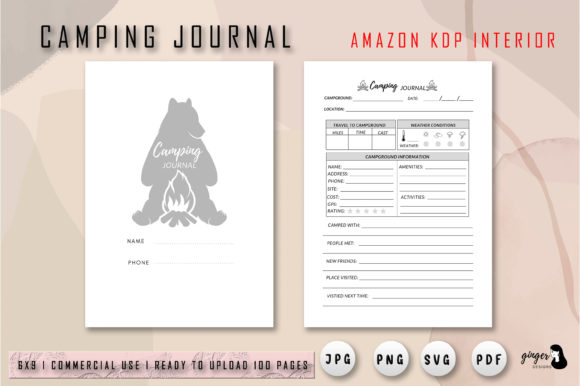
Camping Journal Kdp Interior: Graphics for Kdp Interiors
First Impressions: Rustic Charm Meets Handmade Practicality
When I opened Camping Journal Kdp Interior, I felt that familiar spark—the kind that happens when a graphic design asset lands right in your creative sweet spot. It’s warm, grounded, and quietly confident: think forest greens, earthy browns, subtle watercolor textures, and hand-drawn trail markers—not overly cutesy, not sterile or corporate. This isn’t “camping as cartoon.” It’s camping as memory: pine boughs sketched with gentle pressure, compass roses with soft edges, vintage-style campfire icons with just enough detail to read at 2” but still scale beautifully to 12”. The mood is cozy, nostalgic, and inclusive—ideal for customers who love outdoor adventure without needing gear specs or extreme aesthetics. Think Etsy shoppers browsing handmade journals before a summer road trip, craft fair buyers choosing gift tags for a friend’s cabin weekend, or small business owners building a seasonal “Adventure Awaits” collection.
Real Crafting Uses: From Cricut Projects to Printable Bundles
This isn’t just a journal interior—it’s a versatile graphic design asset that breathes across mediums. I used the SVG file in my Cricut Design Space to cut layered vinyl for custom tote bags (paired with matte olive green vinyl), and the clean vector paths held up perfectly—even on intricate pinecone outlines. The PNG design worked flawlessly for sublimation mugs: I resized it to fit a 4.5” circle, adjusted contrast slightly in Photoshop, and got crisp, fade-resistant results on both white and light gray tumblers. For sticker design, I pulled the transparent PNG into Silhouette Studio, added a subtle drop shadow, and printed peel-and-stick sheets for planner stickers and gift tags. The PDF File is truly print-ready—I uploaded it directly to KDP for a no-fuss journal launch, but I also extracted individual pages as clipart for printable wall art bundles and scrapbooking kits. And yes—it even inspired a t-shirt design: I isolated the compass rose, simplified one layer for screen printing clarity, and paired it with a bold sans serif for contrast.
Where It Shines: Seasonal Collections & Small Business Branding
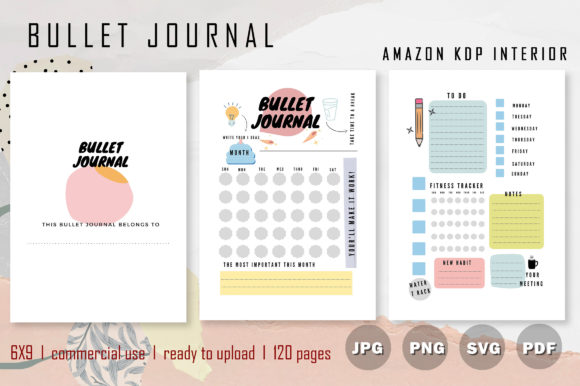
Camping Journal Kdp Interior excels where handmade businesses need cohesion and speed. Its 100-page structure gives me ready-made layouts for printable planners, gratitude logs, and trail journals—perfect for bundling with physical products like wooden pens or hemp twine bookmarks. As a graphic design asset, it’s ideal for seasonal craft fairs: I printed select pages on kraft cardstock for rustic gift tags and party favors (think s’mores kits or mini lanterns). The 6x9 inch size scales cleanly to digital product mockups—especially helpful when listing on Etsy or creative marketplaces. For branding, I lifted color palettes and line weights to unify my shop’s social media graphics and packaging tape designs. It’s also strong in print-on-demand setups: the high-resolution PDF and SVG files integrate smoothly into platforms like Printful or Gelato for mugs, notebooks, and tote bags—no redesign needed.
Where to Proceed Thoughtfully
While this asset is well-built, crafters should pause before assuming universal fit. Thin-lined illustrations—like delicate tent stitching or fine tree branch details—can disappear when cut at under 0.75” on Cricut or Silhouette projects. I tested those elements on my Explore Air 2 using fine-point blade settings and found they required slight stroke thickening. Also, the full-page layouts include subtle background textures that look lovely printed but may not translate cleanly to very small sticker sizes (<1”) or layered vinyl projects requiring precise alignment. If you’re planning multi-layer sublimation designs, preview the JPG and PNG files at 300 DPI on dark substrates first—the watercolor washes soften contrast, so test prints on navy or charcoal are essential. And while the files are labeled “Ready to upload to KDP,” always open the PDF in Acrobat to verify bleed, margins, and font embedding if adding custom text later.
Practical Crafter Notes You’ll Actually Use
- Always test before selling: Run one SVG cut on scrap material, print one page on your target paper stock, and sublimate one mug before fulfilling customer orders.
- Check SVG line integrity: Open in Inkscape or Illustrator—look for stray anchor points or ungrouped layers that could cause cutting errors.
- Preview PNG transparency: Drop it over black and white backgrounds in Canva or Photoshop to confirm no hidden white edges or halos.
- Confirm resolution for sublimation: Zoom to 100%—if pixels blur before 300 DPI at intended size, resample carefully or simplify details.
- Test colors on real products: That forest green looks rich on screen but can shift on cotton vs. polyester—order a sample swatch pack.
- Use mockups early: Place the SVG or PNG on realistic product mockups (tumblers, journals, totes) before finalizing listings—it reveals scale and visual weight instantly.
- Pair fonts intentionally: The hand-drawn feel pairs best with friendly serifs (like Merriweather) or relaxed sans serifs (like Quicksand)—avoid ultra-thin scripts that compete visually.
- Verify commercial license: Double-check the license terms—this is a commercial design asset, but some sellers restrict use in POD templates or resale as standalone clipart.
Final Thought: A Thoughtful Asset for Real Handmade Work
Camping Journal Kdp Interior isn’t flashy—but that’s its strength. It’s built for the rhythm of handmade business: batch production, seasonal pivots, and customer-driven customization. Whether you’re prepping for a fall craft fair, launching an Etsy printable shop, or designing a limited-run tumbler wrap for a local hiking club, this graphic design asset delivers reliable quality without demanding hours of editing. It respects the craft—no overcomplicated layers, no misleading “high-res” claims, no licensing surprises. Just honest, adaptable, print-ready design assets that help you make more—and stress less.